Dream
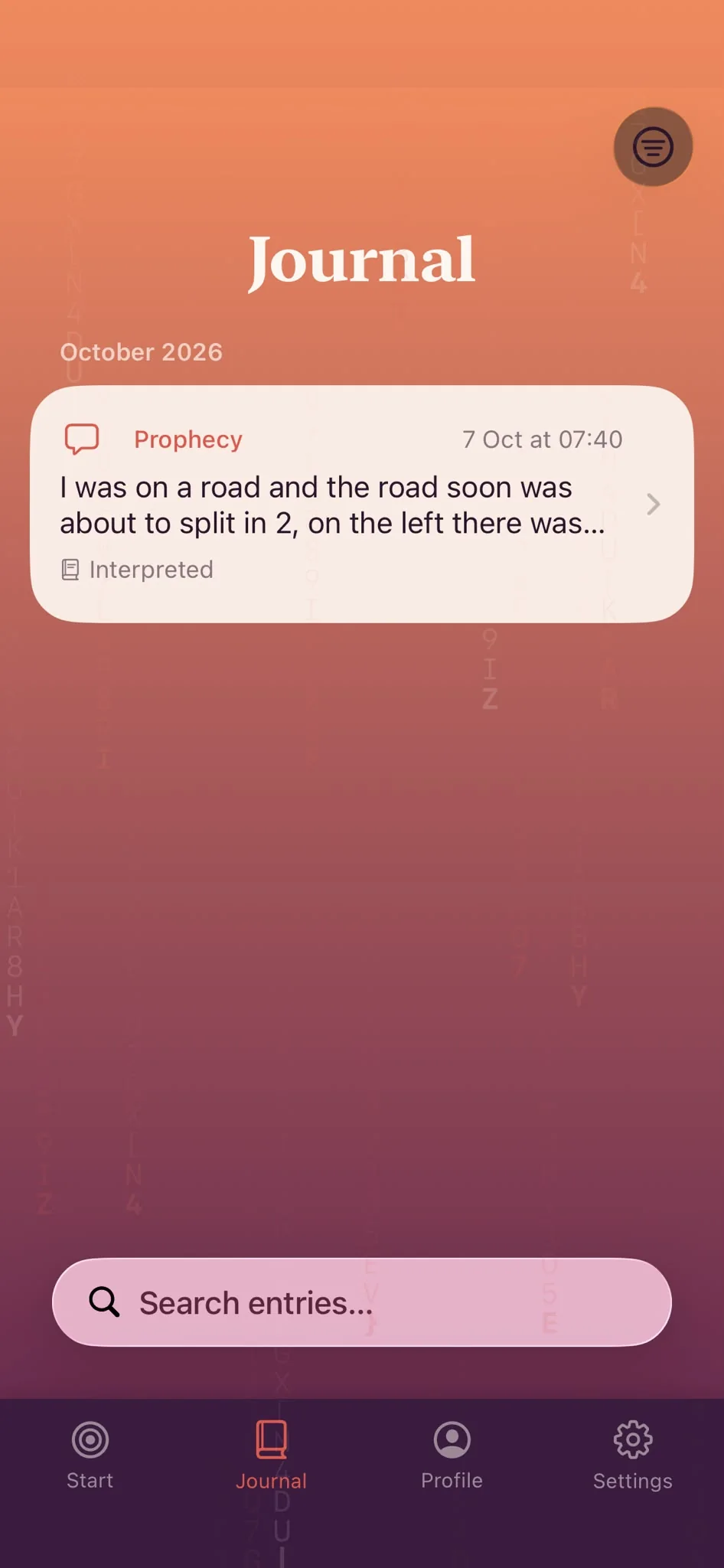
I was standing on the bank of a wide river at night. On the far side a lamp was burning in a window. I wanted to cross, but I had no boat, and I woke before I found one.
 Divine Key
Divine Key is a Christian journal for dreams, visions and prophecies. Write or speak what you saw, then read what the Bible, the Apocrypha and the Church Fathers say about it.
Coming soon to the App Store, for iPhone. For iPhone. Start on the free plan.
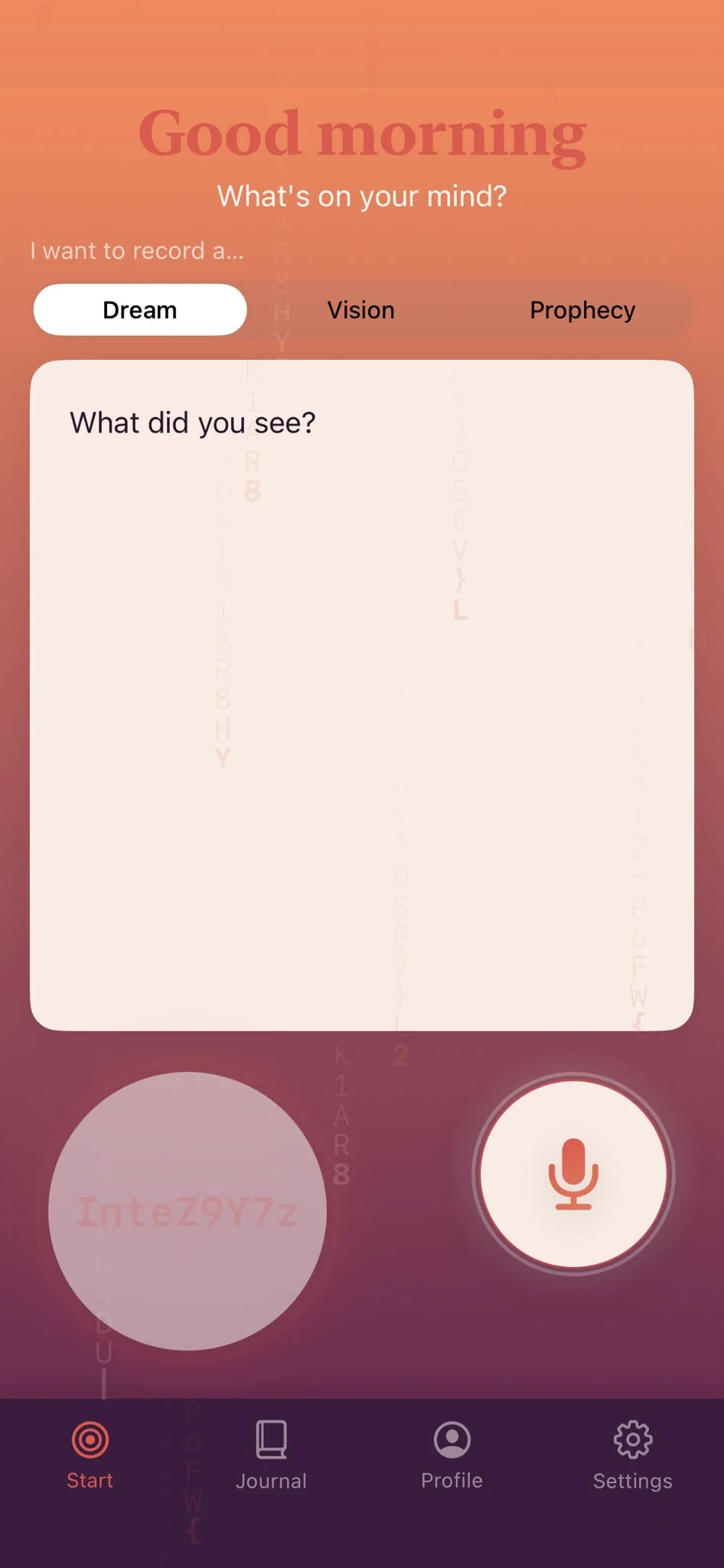
Divine Key takes the images in your entry, such as a river, a lamp or a locked door, and looks for them in the sources you choose. It tells you where each one appears and what the text says there, and it names every passage so you can open it and read it yourself.
Dream
I was standing on the bank of a wide river at night. On the far side a lamp was burning in a window. I wanted to cross, but I had no boat, and I woke before I found one.
Example interpretation
Two images carry this dream: water too wide to cross alone, and a light already burning on the other side. In the sources below, deep water is a place people are led through, and a lamp in the dark is guidance for the next step.
In Isaiah, God promises to be with his people when they pass through the waters, and that the rivers will not overwhelm them. In Joshua, the Jordan stops flowing as soon as the priests' feet touch the water. The psalmist calls God's word a lamp for his feet and a light on his path.
The Wisdom of Solomon remembers the Exodus as Wisdom guiding the people along a marvelous road, becoming a flame of stars for them at night, and leading them through deep waters. Sirach adds a caution: dreams give wings to fools, and deserve attention only when the Most High sends them.
Augustine distinguishes three kinds of vision: with the eyes, with the imagination and with the understanding. He places dreams in the second kind and says their images need the understanding to judge them. Gregory the Great lists several causes of dreams, from the body to revelation, and advises caution because they are hard to tell apart.
A question to reflect on
Where are you standing at the water's edge right now, and what light can you already see from there?
This example was written for this page and shortened. In the app, each source gets about 100 words.
The sources are careful about dreams themselves. Jeremiah condemns prophets who pass off their dreams as God's word, Sirach calls dreams empty unless the Most High sends them, and John tells believers not to believe every spirit but to test them. Divine Key is written with the same caution.
Jeremiah 23:25-28, Sirach 34:1-7, 1 John 4:1
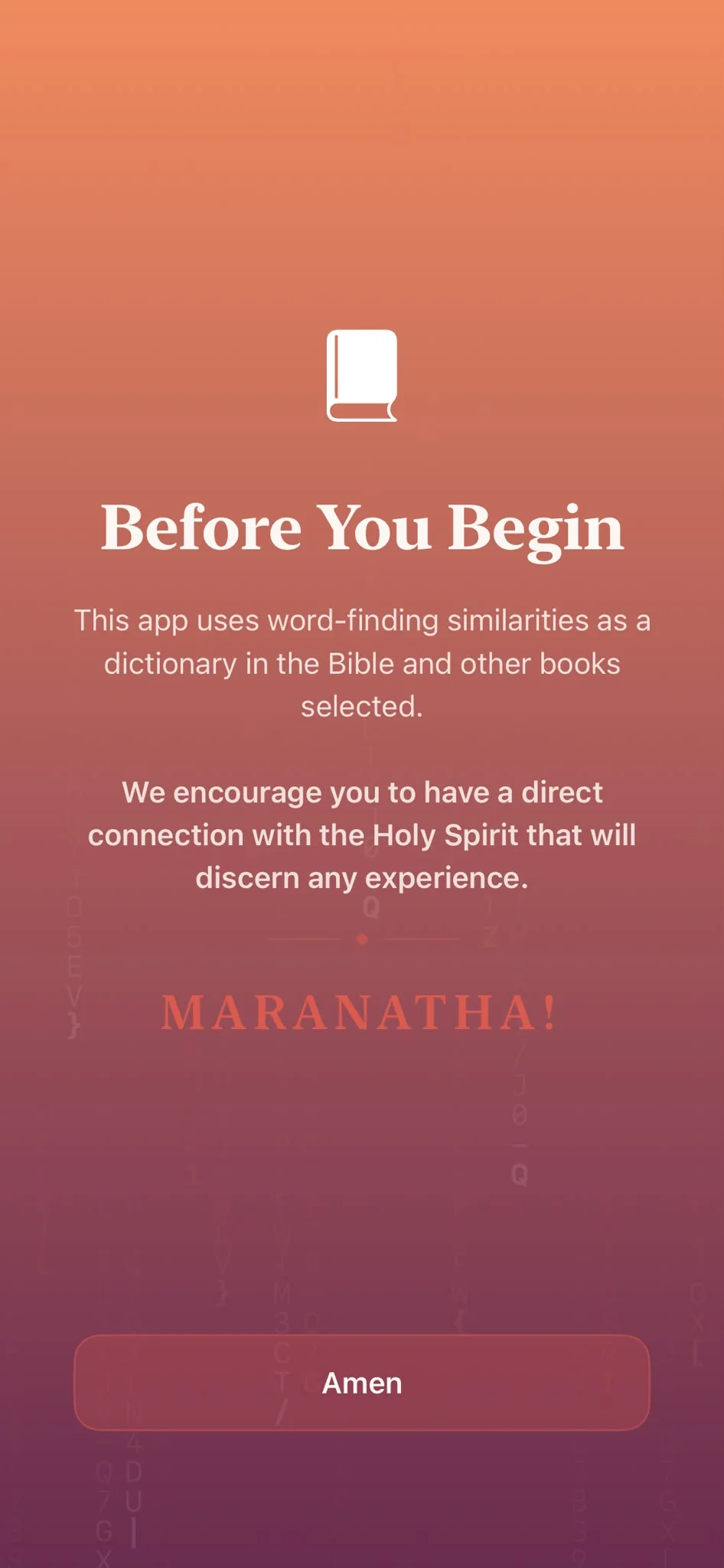
The app is instructed to keep six limits.
Interpretations are written by an AI model that is told to cite only the sources you chose. It can still make mistakes, which is why each interpretation names its passages. Open them, read them, and test what you were given.
Dreams fade by lunchtime. Divine Key keeps each entry with its interpretation, so you can come back to it and notice what returns.